Buying Mobility Equipment Online: What to Know
Table of Contents
- Start With the Buyer, Not the Product
- Power Wheelchair vs Mobility Scooter: Which Fits the Job
- Mobility Scooter Dimensions and Turning Radius: Measure Before You Buy
- Mobility Scooter Battery Range: What the Numbers Really Mean
- Mobility Equipment Shipping and Return Policy: Ask Before You Order
- What to Know Before Buying Mobility Equipment Online: The Checklist
- Common Mistakes When Buying Mobility Equipment Online
- Confirm Details Before You Order
- Frequently Asked Questions
Last Updated: October 6, 2026
Start With the Buyer, Not the Product
Buying mobility equipment online works best when you measure the person and the home before browsing listings. Shoppers often fall for a photo, order, then discover the doorway is too narrow or the heaviest piece is too heavy to lift into a trunk.
Those questions are: where will it be used, who operates it, who lifts it, and what does the budget cover? Get those answers on paper and the shortlist builds itself.
Where the Equipment Will Be Used
Terrain decides more than any brochure. A scooter that glides across a kitchen floor may struggle on gravel or a sloped sidewalk.
Map the daily route honestly:
- Indoor only: tight hallways, carpet transitions, narrow bathroom doors
- Neighborhood: sidewalks, curbs, gentle hills, cracked pavement
- Errands and travel: vehicle loading, store aisles, airports, cruise terminals
Each setting pushes you toward different wheels, suspension, and turning ability. Write down the worst surface and steepest slope on the route. That is your real benchmark.
Who Will Operate and Lift It
The operator and the lifter are often two different people. If the rider has limited upper body strength, tiller controls and seat height matter more than top speed. If a caregiver loads the scooter into a car twice a week, the weight of the heaviest single component decides whether the purchase works.
Before ordering, confirm the weight you will actually need to lift. For a model that disassembles, ask for the heaviest component’s weight. For a folding model, confirm the folded unit’s weight and whether that figure includes the battery.
Power Wheelchair vs Mobility Scooter: Which Fits the Job
Compare the controls and seating of each model. Check the product specifications for the steering method, seat dimensions, adjustability, and available positioning support.
Feature |
Power Wheelchair |
Mobility Scooter |
|---|---|---|
Turning radius |
Check the model’s turning radius |
Check the model’s turning radius |
Seating |
Support and adjustments vary by model |
Support and adjustments vary by model |
Typical strength needed |
Confirm ability to operate the controls |
Confirm ability to operate the controls |
Best for |
Match the model to the rider and intended setting |
Match the model to the rider and intended setting |
Compare individual models against the rider’s needs, available space, transport requirements, and intended terrain. Confirm that the rider can comfortably operate the controls.
Mobility Scooter Dimensions and Turning Radius: Measure Before You Buy
Compare the model’s overall width and stated turning radius with your doorways, hallways, and maneuvering spaces before ordering. Allow room for the rider and turns around furniture.
Grab a tape measure and a notepad. Measure these four things:
- Narrowest doorway the scooter must pass through: measure the clear opening with the door open, accounting for the door itself and any hardware that reduces the available width.
- Narrowest hallway or path along the daily route
- Tightest turn, usually a hallway corner, bathroom entry, or kitchen island
- Clear floor space where the scooter will park and charge
Write each number down. Then compare them to the listed specifications.
How to Measure Turning Radius at Home
Measure the clear space around your tightest corners, including hallway intersections and bathroom entrances. Record nearby doorways, furniture, and other obstacles. Ask the supplier to confirm how the model’s stated turning radius relates to the space needed for your route. If clearance is close, request a demonstration or trial before purchasing.
The Measurements That Decide the Purchase
Overall width: Compare the model’s widest point with your narrowest clear doorway opening, allowing room to maneuver.
Turning space: Share your corner and hallway measurements with the supplier and ask whether the specific model can navigate your route.
Seat dimensions: Confirm the seat width, depth, and available adjustments suit the rider. Request help assessing fit if needed.
Folded dimensions: Check both the vehicle opening and the usable storage space against the model’s folded measurements.
Weight to lift: For a model that disassembles, confirm the heaviest component’s weight. For a folding model, confirm the folded unit’s weight and whether it includes the battery.
When comparing scooters, check the exact model’s current specifications for overall width, turning radius, seat dimensions, folded size, and lifting weight. Use those details alongside your home and vehicle measurements, and ask us to clarify any missing information before ordering.


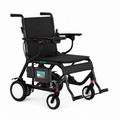
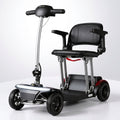
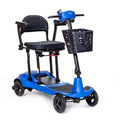
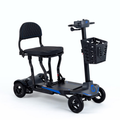
Monarch Mobility Genie auto Folding Mobility Scooter
Folding Mechanisms and Vehicle Fit
Folding mechanisms vary as much as dimensions. Some scooters fold into a compact shape with a single lever; others break into several pieces that must be lifted separately. Ask two questions before you buy:
- Does it fold as one piece or separate into components?
- What weight will you actually lift—the complete folded scooter or the heaviest separated component—and does that figure include the battery?
A scooter that folds small but weighs heavily in one section may still be impractical for a caregiver loading it alone. Match the folding style to the person who will actually lift it.
Mobility Scooter Battery Range: What the Numbers Really Mean
Check the stated range for the exact scooter and battery configuration you plan to order. Ask about the manufacturer’s testing conditions and allow a reserve beyond your planned daily travel.
Battery options: Confirm which battery is included and whether other manufacturer-approved options are available. Compare their stated range, weight, and price.
Charging: Ask for the expected charging time with the supplied charger, and follow the manufacturer’s charging and storage instructions.
Air travel: Before booking, provide your airline with the scooter model and battery specifications. Request confirmation of acceptance and any preparation or documentation requirements.
Choose a battery configuration that suits your intended route, charging access, and transport needs.
Mobility Equipment Shipping and Return Policy: Ask Before You Order
Before paying, review the shipping details and return policy for the exact product you are ordering. Confirm delivery arrangements, return eligibility, deadlines, and any fees in writing.
View the Monarch Genie Auto Folding Mobility Scooter →
A return policy explains eligibility, deadlines, required condition and packaging, return shipping costs, and any restocking fees. A manufacturer warranty has its own coverage period, exclusions, and claim process. Review both before ordering.
Checkout Verification List
Confirm each of these in writing, ideally by email or saved chat, so you have a record:
- Supplier availability, is the model currently in stock, or is it backordered?
- Dispatch and delivery estimates, how soon does it ship, and does the carrier call ahead?
- Shipping charges, including any liftgate or residential delivery fees
- Setup and assembly, what is required on arrival, and what tools are needed?
- Manufacturer warranty terms, what is covered, what is not, and how long it lasts
- Service contacts, who handles warranty claims and replacement parts?
- Return window, return freight, and any restocking fee, get the exact terms in writing
Before ordering from Vet Mobility And Wellness Depot, review our Return and Refund Policy and contact us to confirm shipping, assembly, warranty coverage, and return eligibility for the specific model you are considering.
Why Written Answers Matter
Keep a saved email or chat transcript of the supplier’s answers so you can refer to them after delivery. Request dispatch estimates, shipping charges, and return terms in writing before placing your order.
Delivery, Setup, and What Happens on Arrival
Delivery of bulky equipment is not the same as a package on the porch. Ask whether the carrier brings it inside, leaves it curbside, or requires a signature, whether a liftgate is needed for residential delivery, and what assembly is required. If assembly is required, confirm who is expected to do it. Some equipment arrives mostly assembled; other pieces need the tiller, seat, or battery installed.
Warranty and Replacement Parts
A warranty is only useful if you know how to use it. Before you buy, ask:
- Who do I contact for a warranty claim?
- Are replacement parts available, and how long do they take to ship?
- Does the warranty cover the battery, and for how long?
Batteries are a common point of confusion, some warranties cover the battery for a shorter period than the frame. Ask specifically about battery coverage.
What to Know Before Buying Mobility Equipment Online: The Checklist
Confirm the manufacturer’s weight limit accommodates the rider and any carried items.
- Measure the narrowest clear doorway opening and the space around tight turns.
- Ask the supplier to confirm the model can navigate your intended route.
- Confirm the weight you will actually lift and whether it includes the battery.
- Check folded dimensions against your vehicle opening and storage space.
- Review the stated battery range, testing conditions, and charging time.
- Confirm scooter and battery acceptance with your airline before flying.
- Confirm current availability, dispatch estimates, and delivery arrangements.
- Confirm shipping charges and any additional delivery fees.
- Ask about assembly requirements, warranty contacts, and return eligibility.
Resolve any unanswered questions before ordering, and keep the supplier’s written answers with your purchase records.
Common Mistakes When Buying Mobility Equipment Online
Before ordering, check for these avoidable mistakes:
Treating listed range as guaranteed. Review the exact model’s stated range and testing conditions, and allow a reserve beyond your planned route.
Skipping the return policy. Confirm return eligibility, deadlines, packaging requirements, shipping costs, and any restocking fees before checkout.
Overlooking vehicle fit. Compare the equipment’s transport dimensions with your vehicle’s opening and available storage space, and confirm how you will load it.
Missing warranty details. Confirm coverage, exclusions, and who to contact for claims, service, or replacement parts.
Confirm Details Before You Order
Before placing an order, contact Vet Mobility And Wellness Depot to confirm the exact model’s specifications, current availability, and delivery arrangements.
Measure your home and vehicle, compare those measurements with the model’s dimensions, and confirm lifting weight, battery details, warranty coverage, and return eligibility before paying.
Choosing mobility equipment online comes down to matching verified specifications to your real daily route, not to the most attractive listing. Vet Mobility and Wellness Depot carries mobility scooters, electric wheelchairs, patient transfer lifts, vehicle and mobility lifts, and massage chairs selected for comfort, reliability, and ease of use.
Frequently Asked Questions
What should I check before buying mobility equipment online?
Check the exact model’s weight capacity, seat dimensions, overall size, maneuvering space, lifting weight, and battery details. Compare its dimensions with your home and vehicle measurements. Before ordering, confirm availability, delivery charges, assembly requirements, warranty coverage, and return eligibility with the seller.
How do I choose between a mobility scooter and a power wheelchair?
Compare individual models against the rider’s seating needs, ability to operate the controls, intended routes, available space, and transport requirements. Check each model’s dimensions and turning radius rather than choosing by equipment category alone. Request a demonstration or professional assessment if you need help determining suitability.
How far can a mobility scooter travel on one charge?
Check the manufacturer’s stated range for the exact model and battery configuration. Ask about the testing conditions and allow a reserve beyond your planned route. Follow the manufacturer’s charging instructions rather than treating the listed range as a guaranteed distance.
Can I take a mobility scooter on an airplane?
Before booking, provide your airline with the exact scooter model and battery specifications. Ask the airline to confirm acceptance and any preparation, handling, or documentation requirements for your itinerary. Follow the manufacturer’s transport instructions and keep the airline’s confirmation with your travel records.