Best Lightweight Portable Mobility Scooters 2026
Table of Contents
- What Makes a Portable Mobility Scooter Worth Buying in 2026
- Fit It to the Car Before You Fit It to the Rider
- Durability: What to Check Before Buying
- Quick Comparison: Best Lightweight Portable Mobility Scooters 2026
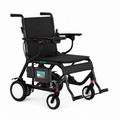
- 1. Monarch Mobility Supa Carbon Lite: The 29-Pound Carbon Fiber Option
- 2. Luggie Super Plus 3 by FreeRider USA: 360-Pound Capacity in a Three-Wheel Frame
- 3. Luggie Super Plus 4 by FreeRider USA: Four-Wheel Stability for Heavier Riders
- How We'd Choose
- Frequently Asked Questions
Last Updated: October 4, 2026
What Makes a Portable Mobility Scooter Worth Buying in 2026
A portable mobility scooter is a lightweight, folding electric scooter built to break down for transport in a car trunk, airplane cargo hold, or cruise cabin. When comparing lightweight portable mobility scooters, four practical factors matter most: manageable lifting weight, a removable lithium-ion battery that meets applicable airline requirements, a folding mechanism that is easy to operate, and a durable frame suited for regular use.
Most shoppers focus on price, but the real decision is weight versus stability.
The Four Numbers That Actually Decide the Purchase
Don’t rely on advertised total weight alone. What matters most for transport is the heaviest single component you or a caregiver may need to lift, especially when the battery or other removable parts are taken off. Always compare the manufacturer’s listed component weights before deciding what will be manageable for your vehicle and your lifting ability.
- Heaviest single piece. Compare the weight of the heaviest component you may need to lift, not just the total scooter weight. Consider your own lifting ability and whether another person or a vehicle lift may be needed.
- Battery watt-hours. Airlines evaluate lithium batteries by watt-hours, and requirements can vary by carrier and battery configuration. Check the battery specifications and confirm the airline’s current rules before traveling.
- Seat-to-deck height and tiller reach. A scooter should fit both the vehicle and the rider. Check seat height, tiller position, legroom, and overall comfort before purchasing.
Fit It to the Car Before You Fit It to the Rider
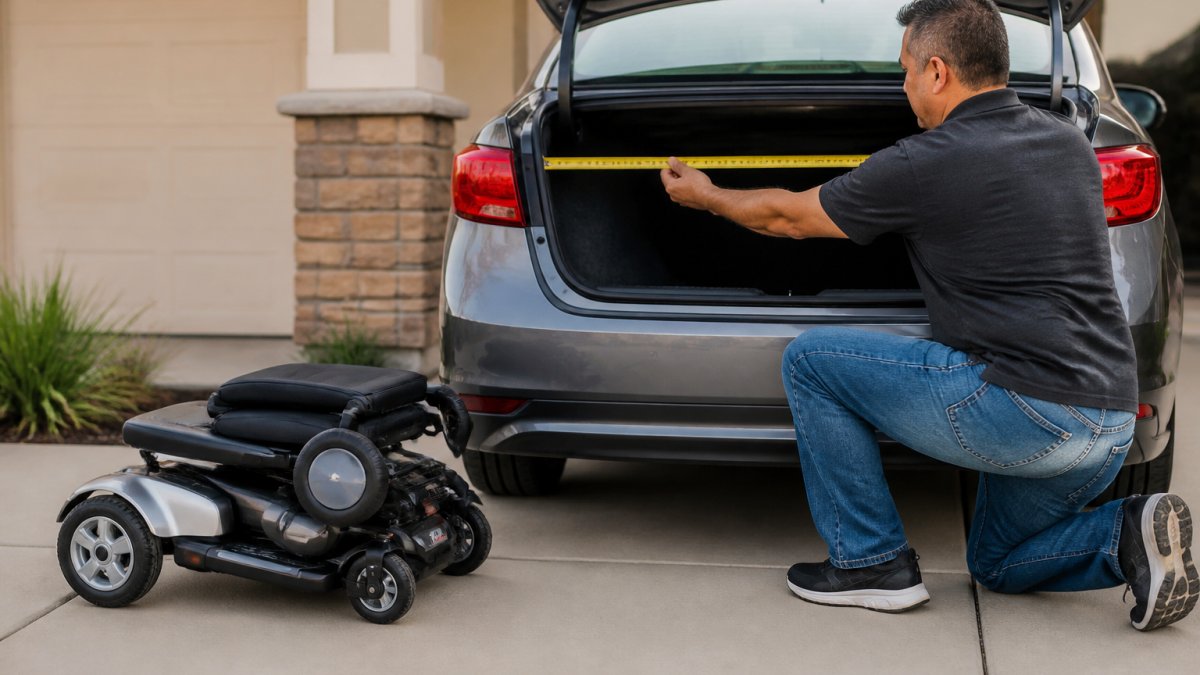
Folded dimensions on a specification sheet are a useful starting point, but real-world vehicle fit also depends on the size and shape of the trunk or cargo opening. Before purchasing, compare the scooter’s folded dimensions with your vehicle’s available cargo space and consider any trunk lip, hinge, liftgate, or interior obstruction that could affect loading.
Before ordering, do three things:
- 1. Measure the trunk or cargo opening at its narrowest usable point.
- 2. Measure the height you may need to lift the scooter or its heaviest component.
- 3. Compare the scooter’s folded length, width, and height with the available cargo space in your vehicle.
Durability: What to Check Before Buying
Portable folding scooters have several components that deserve extra attention because they are used repeatedly during folding, transport, charging, and daily operation.
Folding hinge and latch. Check that the folding mechanism operates smoothly and locks securely in place. Follow the manufacturer’s inspection and maintenance guidance.
Battery connectors. Inspect connectors for damage, looseness, or debris, especially if the battery is removed frequently for transport or charging.
Tiller adjustment hardware. On models with adjustable tillers, make sure locking mechanisms are secure and operate properly.
Replacement parts and support. Before purchasing, consider whether batteries, tires, chargers, and other replacement components are readily available for the model you choose.
Insurance and Reimbursement: What Buyers Should Know
Coverage for mobility scooters can vary based on the equipment, the buyer’s medical need, the supplier, and the specific insurance plan. Portable or travel-focused scooters may be treated differently from other mobility equipment, so buyers should verify coverage before purchasing.
Medicare. Some mobility scooters may qualify as durable medical equipment when Medicare’s medical-necessity, documentation, supplier, and coverage requirements are met. Coverage depends on the individual situation and the specific equipment. Customers should confirm eligibility and requirements directly with Medicare or their health plan before purchasing. Vet Mobility & Wellness Depot does not guarantee Medicare or insurance reimbursement.
Private insurance and Medicare Advantage. Coverage, prior authorization, documentation requirements, and eligible equipment can vary by plan. Customers should contact their plan directly before purchasing.
Match the Scooter to the Rider’s Needs
“Lightweight” and “portable” can mean different things to different riders. The best choice depends on how the scooter will be used, transported, folded, and adjusted.
Limited grip strength or hand mobility. Consider whether the folding mechanism, controls, and battery removal process are easy for the rider or caregiver to operate.
Limited lifting ability. Compare the scooter’s heaviest removable component and overall transport weight with what the rider or caregiver can safely manage.
Back, shoulder, or positioning needs. Look for features such as adjustable tillers, armrests, and seating that help the rider maintain a comfortable position.
Choose the scooter based on fit, comfort, transport needs, and ease of operation rather than weight alone.

Quick Comparison: Best Lightweight Portable Mobility Scooters 2026
Model |
Weight (no battery) |
Capacity |
Range |
Best For |
|---|---|---|---|---|
29 lbs |
275 lbs |
9 mi |
Lightest option |
|
Genie |
36 lbs |
275 lbs |
9 mi |
Adjustable comfort |
Genie Auto |
39 lbs |
275 lbs |
9 mi |
Arthritis-friendly folding |
Luggie Super Plus 3 |
66 lbs |
360 lbs |
12.5 mi |
Higher capacity, 3-wheel |
Luggie Super Plus 4 |
70 lbs |
360 lbs |
12.5 mi |
Four-wheel stability |
In this comparison, the lightest models shown have a 275-lb weight capacity, while the Luggie Super Plus models offer higher capacity. Second, range and weight move together: extended-range batteries add pounds you'll feel at the trunk.

1. Monarch Mobility Supa Carbon Lite: The 29-Pound Carbon Fiber Option
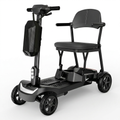
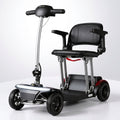
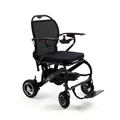
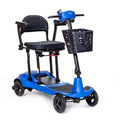
The Supa Carbon Lite is a lightweight carbon-fiber folding mobility scooter designed for portability and easier transport. It weighs approximately 29 lbs without the battery and supports riders up to 275 lbs.
Its travel range is up to approximately 9 miles per charge, depending on factors such as rider weight, terrain, battery condition, and operating conditions.
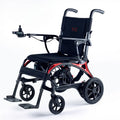
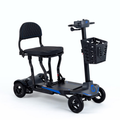
For riders who prefer powered folding, the Monarch Mobility Genie Auto offers an automatic folding and unfolding mechanism operated by remote control. Because product weights and operating procedures differ by model, buyers should review the manufacturer’s specifications and instructions before transporting or folding the scooter.
2. Luggie Super Plus 3 by FreeRider USA: 360-Pound Capacity in a Three-Wheel Frame
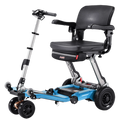
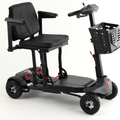
The Luggie Super Plus 3 is a three-wheel folding mobility scooter designed for riders who want higher weight capacity while maintaining a relatively compact turning radius.
It supports riders up to 360 lbs and includes a 17-inch padded seat, front suspension, and Smart Turn Assist Technology. Its three-wheel configuration can be helpful in tighter indoor spaces, though handling and stability should always be evaluated based on the rider’s needs and environment.
At approximately 66 lbs without the battery and armrests, it is heavier than the Monarch models shown above, so buyers should consider how the scooter will be lifted, loaded, and transported before purchasing.
3. Luggie Super Plus 4 by FreeRider USA: Four-Wheel Stability for Heavier Riders
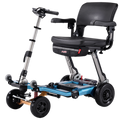
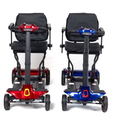
The Luggie Super Plus 4 is a four-wheel folding mobility scooter designed for riders who want the higher-capacity features of the Super Plus line with a four-wheel configuration.

It supports riders up to 360 lbs and includes a 17-inch seat, front coil suspension, adjustable seat height, and Smart Turn Assist Technology.
At approximately 70 lbs without the battery and armrests, it is heavier than the Super Plus 3 and the Monarch models shown above. Buyers should consider both the added four-wheel configuration and the transport weight when deciding whether it fits their needs.
Medicare durable medical equipment coverage overview
How We'd Choose
Choose a mobility scooter based on how it will be used, transported, folded, and stored.
Before buying, compare the scooter’s weight, folded dimensions, battery specifications, weight capacity, turning radius, seating, and folding method with your individual needs.
If you plan to travel by air, review the airline’s current battery and mobility-device requirements before your trip. If insurance or Medicare coverage is important, verify eligibility, documentation, supplier requirements, and prior authorization before purchasing.
The best scooter is the one that fits the rider, the vehicle, and the intended use—not simply the lightest model.
Frequently Asked Questions
Will Medicare pay for a portable mobility scooter?
Medicare Part B may cover certain mobility scooters as durable medical equipment when Medicare’s medical-necessity, documentation, supplier, and coverage requirements are met. Coverage depends on the individual situation and the specific equipment. Portable or travel-focused scooters may not qualify in every case. Before purchasing, confirm eligibility, documentation requirements, and supplier requirements directly with Medicare or your health plan. Vet Mobility & Wellness Depot does not guarantee Medicare or insurance reimbursement.
Are lightweight portable mobility scooters airline-approved for travel?
Many lightweight portable mobility scooters can be suitable for airline travel when their battery type, watt-hour rating, and handling requirements meet the airline’s current rules. The Monarch Mobility Supa Carbon Lite, Genie, Genie Auto, and the Luggie Super Plus models use removable lithium-ion battery configurations, but approval can depend on the exact battery installed and the airline’s policies. Before traveling, confirm the scooter and battery specifications with the airline and follow the manufacturer’s travel instructions.
What is the lightest weight folding mobility scooter available?
The Monarch Mobility Supa Carbon Lite is the lightest option in this lineup at approximately 29 lbs without the battery and about 33 lbs with it. Its carbon-fiber frame makes it easier to lift into a vehicle or carry through a terminal than the heavier models in this comparison. Buyers should also consider weight capacity, range, folding method, seating, and overall fit rather than choosing on weight alone.
How do I transport a mobility scooter in a standard vehicle?
Many folding mobility scooters are designed to fit in a vehicle trunk or cargo area, but fit depends on the scooter’s folded dimensions and the size and shape of the vehicle opening. Before loading, compare the scooter’s folded length, width, and height with the available cargo space. Also consider the weight of the heaviest component you may need to lift. Follow the manufacturer’s instructions for folding, battery removal, lifting, and transport, and use a vehicle lift or assistance if the scooter is too heavy to load safely.
What should I look for in a portable mobility scooter?
When comparing portable mobility scooters, consider total weight, the heaviest component you may need to lift, weight capacity, travel range, top speed, turning radius, seating, and folded dimensions. Look for a folding mechanism and battery setup that are practical for your needs, along with suitable tires and braking features. If you plan to travel by air or cruise, verify the scooter and battery specifications with the carrier before your trip. Adjustable tiller and seat-height features can also improve comfort and fit for longer rides.